Medical Mistrust: Why Some Communities Are Wary of Modern Healthcare

Let us say your doctor recommends you get vaccinated. Would you believe them?
If you are like most of the people reading this, then yes. Of course you would. However, for millions of Americans, that answer is far from obvious. When you understand where that hesitation comes from, it is easy to understand why.
Too often we discuss "vaccine hesitancy," or "low screening rates" within communities as if they are simply a personal decision. Or worse, as a sign of ignorance. However, anthropology has a term that describes this phenomenon more accurately. Moreover, it is far more forthright than using loaded words like "hesitant" to describe these behaviors. We call it medical mistrust. It is not irrational. It is predictable based on what has happened, and continues to happen.
What Medical Mistrust Actually Means
Medical mistrust is the skepticism towards medical institutions, providers, and treatments that people learn through experiences and negative treatment (also reinforced by current events).
Medical mistrust differs from "I do not trust that doctor." Mistrust means you do not trust the system as a whole. Maybe you come from a family that fears doctors because of what they have experienced. Understanding this difference matters because it shapes how we should approach the issue. You cannot hand someone a brochure to solve medical mistrust. You must understand how they came to feel that way.
The Tuskegee Study: Where the Story Usually Starts

Most people have heard of the Tuskegee Syphilis study, if not taken a class about it. For good reason: it is one of the clearest examples of the U.S. government betraying its own people.
Beginning in 1932, the U.S. Public Health Service recruited approximately 600 Black men in Macon County, Alabama, nearly 400 of whom had syphilis, to participate in a study to document the natural progression of untreated syphilis. Participants were never informed of their true condition; rather, researchers misled men by telling them they were receiving treatment for "bad blood," a local euphemism for several unrelated illnesses. Men who participated in the study were provided free physicals, meals, and burial insurance in exchange for their involvement, though they never actually received treatment for their diagnosed conditions (Centers for Disease Control and Prevention [CDC], n.d.).
However, the truly outrageous part is not even that they withheld treatment initially; by the late 1940s, penicillin was an inexpensive, widely available cure for syphilis, and researchers chose to withhold it so they could continue observing participants' symptoms (Mohamed, n.d.). The study did not end because the researchers decided to stop. It ended in 1972 after a whistleblower leaked information to the press, sparking a news exposé, public outrage, and a federal investigation (Encyclopedia Britannica, n.d.). By that time, it had been running for 40 years, and researchers estimate that over 100 participants died of syphilis-related complications.
The resulting scandal transformed research ethics in America. The case led to a $10 million class-action settlement, a 1974 National Research Act mandating institutional review boards for any research on humans, and an official presidential apology issued by Bill Clinton in 1997 (Encyclopedia Britannica, n.d.).
Tuskegee is the best-known example, but it is not an isolated one.
Beyond Tuskegee
Sterilization abuse against Native American women. During the 1960s and 1970s, physicians employed by the Indian Health Service (IHS) sterilized Native American women, frequently without their free and informed consent, through tactics that included misleading women about whether a procedure would lead to sterilization, to outright threatening to cut off welfare benefits or healthcare if Native women did not agree to be sterilized (National Library of Medicine [NLM], n.d.). After conducting a study in 1976, the federal government determined that four of twelve IHS regions sterilized 3,406 American Indian women without their permission from 1973 to 1976 alone, including 36 women under age 21 who were sterilized in violation of a court-ordered moratorium on sterilizing minors (NLM, n.d.). Prior research conducted by an independent researcher believed these numbers were drastically underestimated: approximately 25% of Native American women capable of childbearing had been sterilized without their consent. This researcher, Jane Lawrence, found that the IHS had "singled out full-blooded Indian women for sterilization procedures" (Lawrence, 2000, as cited in NLM, n.d.). There are chilling individual cases too. Lawrence (2000) shares the story of a Native American woman who was sterilized through hysterectomy after telling her doctor at age 26 that she wanted a "womb transplant" so she could start a family with her husband.
Henrietta Lacks' story and the HeLa cell line. Back in 1951, Henrietta Lacks, a Black woman undergoing cancer treatment at Johns Hopkins Hospital, had a sample of her tumor cells taken without her knowledge or consent. This was common practice at the time, as the procurement of human tissue for research was completely unregulated (Skloot, 2010). However, her cells were remarkably different than any others that had come before. They could live and grow outside the human body indefinitely, creating what is known to this day as the first immortalized human cell line: HeLa cells. Researchers have used HeLa cells in an estimated 74,000-plus published studies over the past 70+ years, helping to find cures for diseases like polio and cancer, as well as perfect in vitro fertilization techniques (Skloot, 2010). However, neither Henrietta Lacks nor her family received compensation for these achievements, nor were they informed about developments involving her cells for decades, even as pharmaceutical and biotech companies sold products derived from them for profit (Skloot, 2010). In fact, it was not until 2013 that the Lacks family was even granted any rights to vote on how her genome could be used for scientific research; they did not receive the right to financial compensation as part of that agreement.
These are not ancient history. Many people whose grandparents lived through Tuskegee, or who are old enough to remember the sterilization scandal, are alive today. This is not abstract for the communities it affected; it's family history.
Mistrust Is Not Just About the Past.
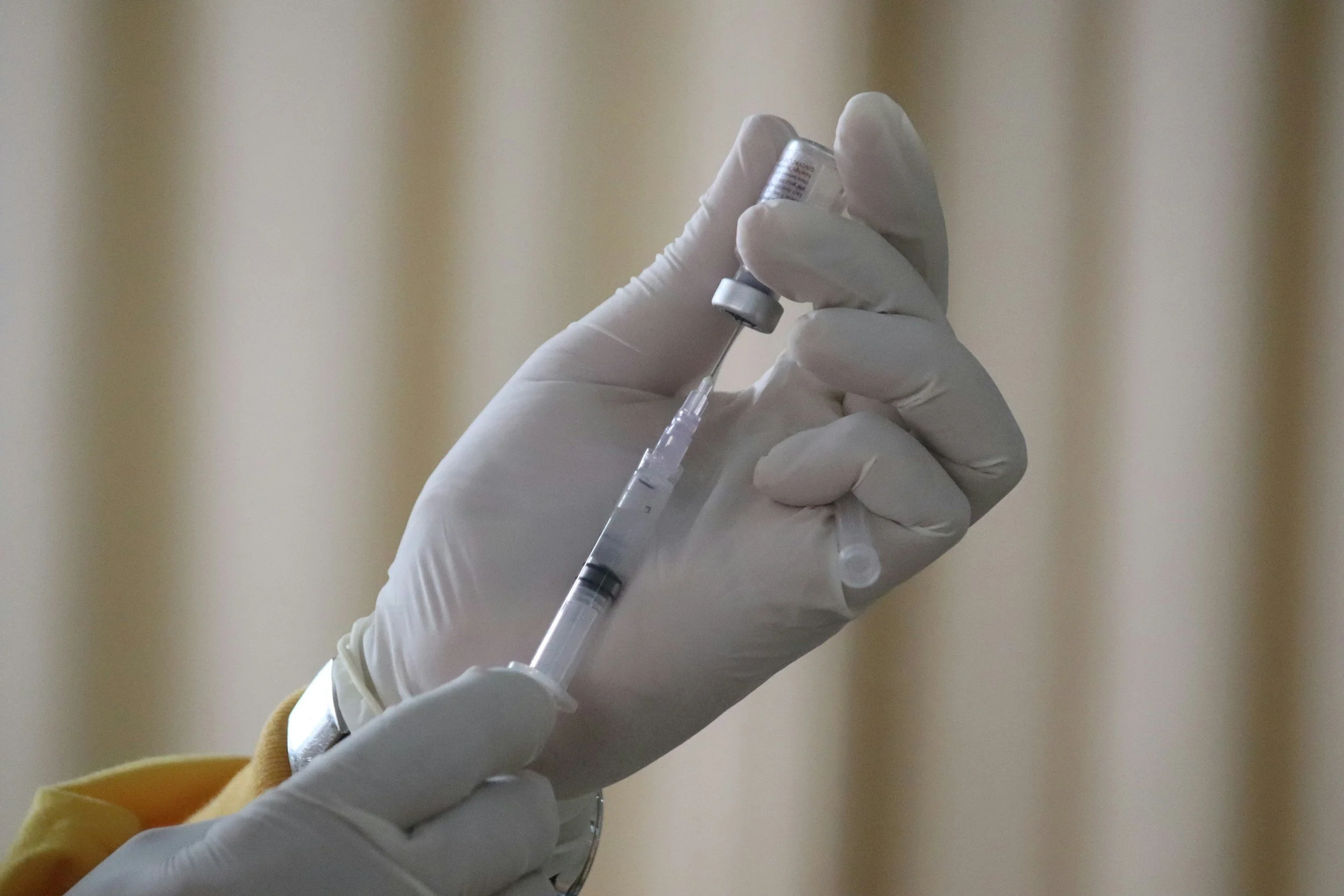
One nuance many people leave out of this discussion: Evidence suggests that present-day discrimination in health care may matter more than historical memory alone.
Researchers at UCLA recently surveyed Black and white adults about their trust in medical professionals and intentions to get the COVID-19 vaccine. Nearly all participants, regardless of race, knew about the Tuskegee study, but familiarity with that piece of medical history did not predict medical mistrust or vaccine hesitancy. What did predict mistrust? Recent experiences: Black participants reported having worse experiences with health care today (UCLA College, 2022). As study author Kimberly Martin explained, "Black Americans do not have to reach into the past for examples of inequity in health care; many have experienced it themselves" (para. 4).
It matters when our past experiences with medical systems shape how we view care today. Medical mistrust is not about rejecting modern medicine because of something that happened 80 years ago. Instead, it is often the result of many small experiences that indicate (accurately) that the medical establishment does not have your best interest in mind. You do not feel heard. Your pain is exaggerated. You receive worse information about a diagnosis. You do not see people who look like you caring for you. A 2024 review of vaccine hesitancy among Black and African American people found similar results: mistrust of the medical establishment stemmed from both a history of harmful research and ongoing, contemporary institutional distrust rooted in present-day experiences within the health care system (Savoia et al., 2024). That mistrust can have real-world health implications: past research has connected it to medication non-adherence, poorer engagement with preventive care, lower quality of life, and lower rates of vaccine and screening uptake (Dong et al., 2022).
Why This Matters for How We Talk About Public Health
There is an understandable temptation to view low vaccination or screening rates in certain communities as a "misinformation" problem that can be solved with better messages. However, if mistrust, rooted in real events and lived experience, is the problem, the solution is not a better pamphlet or a snappier slogan. It is consistency. It is transparency. It is treating people better. It is hard. It is slow.
Anthropology lets us see what is missing from this conversation. Sure, a bio or clinical perspective can tell you what medicine does to your body. However, it cannot tell you why you might not want that medicine; it cannot tell you why refusing it might be the logical conclusion when you take into account what someone has lived through.
You cannot understand health without understanding people: their history, their relationship to institutions, what earned them trust or what made them lose it. If we want to address health disparities, we need to treat mistrust less like a hurdle to overcome in convincing people to accept care and more like the information it is.
References
Centers for Disease Control and Prevention. (n.d.). The untreated syphilis study at Tuskegee timeline. https://www.cdc.gov/tuskegee/about/timeline.html
Dong, L., Bogart, L. M., Gandhi, P., Aboagye, J. B., Ryan, S., Serwanga, R., & Ojikutu, B. O. (2022). A qualitative study of COVID-19 vaccine intentions and mistrust in Black Americans: Recommendations for vaccine dissemination and uptake. PLoS ONE, 17(5), Article e0268020. https://doi.org/10.1371/journal.pone.0268020
Encyclopedia Britannica. (n.d.). Tuskegee syphilis study. https://www.britannica.com/event/Tuskegee-syphilis-study
Lawrence, J. (2000). The Indian Health Service and the sterilization of Native American women. American Indian Quarterly, 24(3), 400–419. https://doi.org/10.1353/aiq.2000.0008
Mohamed, S. (n.d.). The Tuskegee syphilis study (1932–1972). Embryo Project Encyclopedia, Arizona State University. https://embryo.asu.edu/pages/tuskegee-syphilis-study-1932-1972
National Library of Medicine. (n.d.). 1976: Government admits unauthorized sterilization of Indian women. Native Voices Timeline. https://www.nlm.nih.gov/nativevoices/timeline/543.html
Savoia, E., Masterson, E., Olander, D. R., Anderson, E., Mohamed Farah, A., & Pirrotta, L. (2024). Determinants of vaccine hesitancy among African American and Black individuals in the United States of America: A systematic literature review. Vaccines, 12(3), Article 277. https://doi.org/10.3390/vaccines12030277
Skloot, R. (2010). The immortal life of Henrietta Lacks. Crown Publishers.
UCLA College. (2022, October 27). Black Americans' COVID vaccine hesitancy stems more from today's inequities than historical ones. https://www.college.ucla.edu/2022/10/27/causes-of-covid-vaccine-hesitancy-among-black-americans
