Why Your Zip Code Determines Your Health

A baby born downtown in Chicago's business district, the Loop, can expect to live to be 83 years old. A baby born just three stops on the el south, in Washington Park, will only live to be 69. That lifespan gap is greater than the difference between life expectancy in the United States and Honduras (HIMSS, 2019).
It's common to think that these sorts of differences are a result of our genetic makeup or our daily habits, including what we eat, our exercise routines, and whether we smoke. The frustrating reality that public health researchers who spend their careers studying why some populations thrive, and others do poorly, keep rediscovering is that the single biggest predictor of one’s individual health is their zip code. “Health by zip code,” many in the public health community call it. One frequently referenced rough breakdown even estimates that roughly 60 percent of our individual health outcomes are determined by social and economic factors and behavior, around 30 percent by genetics, and a full one-third is out of the hands of health care professionals altogether (only about 10 percent is determined by the quality of care we receive) (Lawry, 2025). Or, as another way to look at it, your zip code could tell your doctor more about your future health than your DNA does (National Community Reinvestment Coalition [NCRC], 2021).
The Idea Has a Name: Social Determinants of Health
Public health researchers refer to these forces as the “social determinants of health,” or SDOH. The Centers for Disease Control and Prevention defines social determinants of health as “conditions in the environments where people are born, live, learn, work, play, worship, and age that affect a wide range of health, functioning, and quality-of-life outcomes and risks. These conditions are shaped by policies and systems” (CDC, 2024). In other words, it’s an unnecessarily clinical way of saying we all know what: where you live impacts your health just as much as your genes or your most recent doctor’s appointment.
The national Healthy People 2030 initiative from the federal government groups SDOH into five categories: economic stability, education access and quality, health care access and quality, neighborhood and built environment, and social and community context (Office of Disease Prevention and Health Promotion [ODPHP], n. d.). Layer those five categories on top of one another in one neighborhood: strong or weak schools, sidewalks or no sidewalks, a local grocery store or a twenty-minute drive to the closest healthy food option. Now you begin to understand how a zip code can be a health predictor.
What the Research Actually Shows
It’s not just a vivid metaphor. Researchers have charted it nationwide, using some of the most granular data we have.
Pulling together 1.4 billion tax records and linking them to death records, economist Raj Chetty and colleagues found stark differences in how long Americans live based on income and where they live. Published in the journal JAMA in 2016, it is one of the most highly cited papers in that topic to date (Chetty et al., 2016). The big takeaway: the wealthiest American men live about 15 years longer than the poorest men. The richest women live about 10 years longer than the poorest women, and the gap between these groups is growing (Opportunity Insights, n. d.).
Here's the part that surprises people: Chetty’s team calculated healthcare spending per county by Medicare fees and discovered “…virtually no association between health care spending and low-income life expectancy” (Chetty et al., 2016). Money spent on the medical system within a county wasn’t correlated to increased lifespan for the poorest citizens. What appeared to make a difference were factors outside of medical care: the built environment, economics, and social nature of the county itself.
Why Hospitals Are Starting to Pay Attention
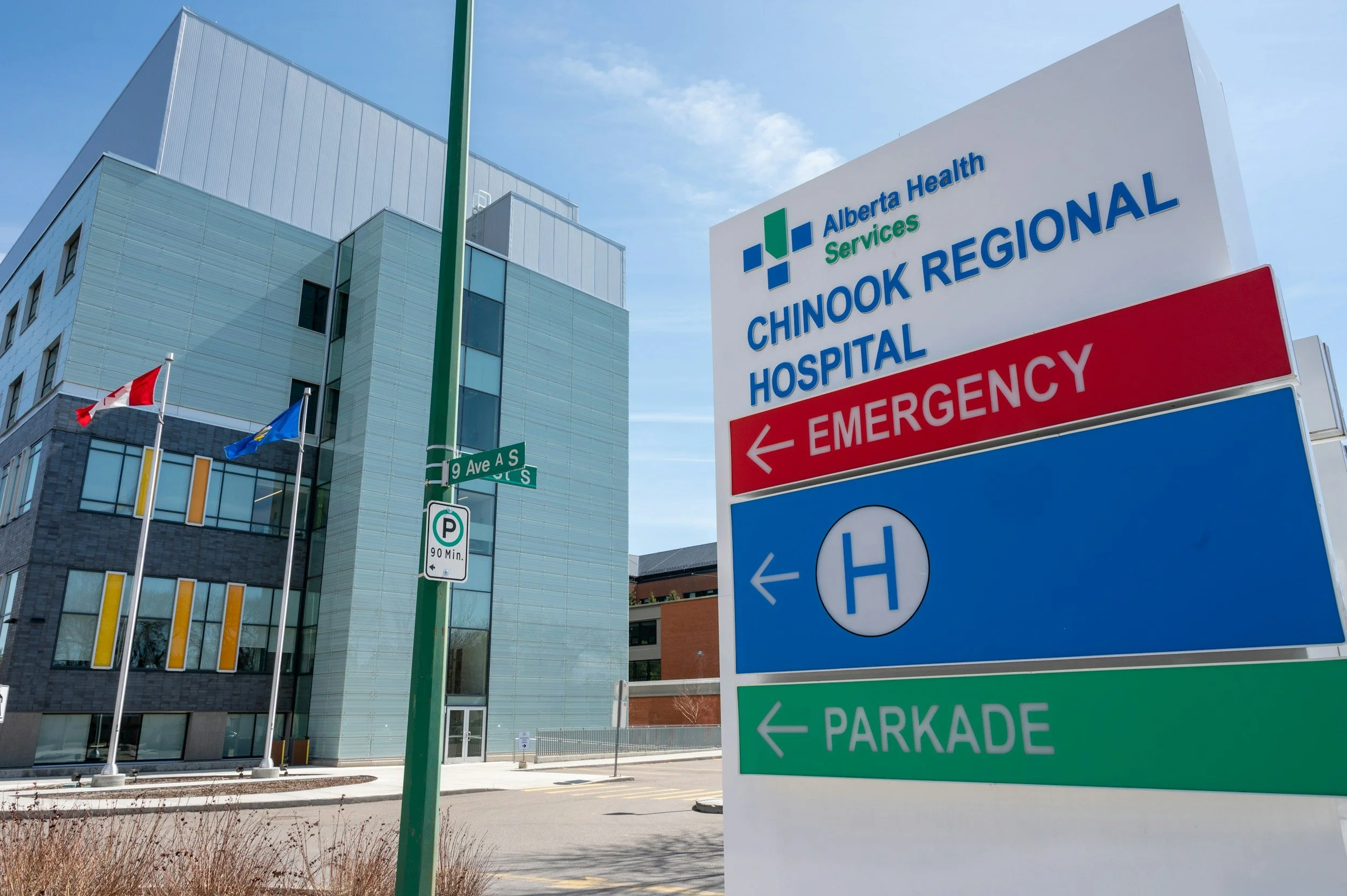
Hospitals and health systems are just beginning to see this connection. According to the American Hospital Association, "Income, housing stability, steady employment, access to healthy foods, and education attainment correlate so strongly with the health of a community that where you live —your zip code—has become a powerful predictor of health." (AHA, 2018) Some hospitals are attempting to screen for SDOH, asking patients questions about stable housing or access to food alongside questions about blood pressure and symptoms, using that data to inform care planning.
However, change is not yet systemic. Although there is increasing recognition of SDOH, data on a patient’s neighborhood and situation are not always factored into daily clinical decision-making processes (HIMSS, 2019). We have the data. We just don’t have the reflex of using it yet.
The Bottom Line
This doesn’t mean biology or personal decisions aren’t important. Of course they are. But they exist within a larger system that’s saying whether you’ll live past 35 before you’ve made a single decision in life. Your zip code isn’t your destiny. But it is a series of odds, stacked quietly against you or for you during your day-to-day life, in your walk to the local grocery store, in the air coming through your window, the school down the street, the distance to the nearest health clinic.
Realizing this is step one in fixing it. The second is figuring out what it takes, legislatively, financially, what it takes in terms of will, to even out those odds, zip code by zip code.
References
American Hospital Association. (2018, May 16). Your zip code, your health. AHA News. https://www.aha.org/news/insights-and-analysis/2018-05-16-your-zip-code-your-health
Centers for Disease Control and Prevention. (2024, October 15). Social determinants of health (SDOH).https://www.cdc.gov/about/priorities/why-is-addressing-sdoh-important.html
Chetty, R., Stepner, M., Abraham, S., Lin, S., Scuderi, B., Turner, N., Bergeron, A., & Cutler, D. (2016). The association between income and life expectancy in the United States, 2001–2014. JAMA, 315(16), 1750–1766. https://pmc.ncbi.nlm.nih.gov/articles/PMC4866586/
Common Ground Health. (2023, April 10). The social determinants of health: Your zip code matters.https://commongroundhealth.org/blog/the-social-determinants-of-health-your-zip-code-matters
HIMSS. (2019, March 28). Social determinants of health: Can ZIP codes influence health outcomes?https://www.himss.org/resources/social-determinants-health-can-zip-codes-influence-health-outcomes/
Lawry, T. (2025, April 3). Genetic code vs. zip code – The social determinants of health.https://www.tomlawry.com/genetic-code-vs-zip-code-the-social-determinants-of-health
National Community Reinvestment Coalition. (2021, June 30). Your zip code is more important than your genetic code.https://ncrc.org/your-zip-code-is-more-important-than-your-genetic-code/
Office of Disease Prevention and Health Promotion. (n.d.). Social determinants of health. Healthy People 2030. Retrieved July 12, 2026, from https://odphp.health.gov/healthypeople/priority-areas/social-determinants-health
Opportunity Insights. (n.d.). Health Inequality Project: The association between income and life expectancy in the United States, 2001–2014. Retrieved July 12, 2026, from https://opportunityinsights.org/paper/lifeexpectancy/
Tulane University School of Public Health and Tropical Medicine. (2022, September 15). Health disparities by ZIP code: Public health inequality. https://publichealth.tulane.edu/blog/health-disparities-by-zip-code/
