How Your Culture Shapes Pain
Picture the ER. A man walks in holding his hand, bent the way hands should not bend. A nurse asks how he feels on a scale of 1-10. "Probably a 3." He grinds his teeth and answers.
The woman in the next bed has a sprained ankle. She rates her pain a 9. No hesitation. She rates it a 9.
The nurse records both numbers on a chart as if they were both factual values. They are not. They are translations of something no one can see but that person. That translation happens through the language of family and culture. This post is about that.
Pain Is More Than Just A Signal To The Brain
Pain is generally thought of as something that happens when tissue is damaged. Something sends a message to your brain that you experience as pain. Pain scientists have moved away from that view. In 2020, the International Association for the Study of Pain changed its definition of pain for the first time since 1979. Their previous definition depended on the person's ability to express pain, which may exclude those who cannot express themselves, such as some older adults or those who struggle to communicate.
The new definition describes pain as an unpleasant sensory and emotional experience, with these notes attached that I think are relevant to this post. Pain is always affected by biological, psychological, and social factors. Pain and nociception are different, so we cannot determine pain based on the stimuli that activate our nervous system. We should respect a person's report of pain (Raja et al., 2020).
So basically, pain scientists think that you cannot determine how much someone hurts by looking at their nervous system. So we have to look at the person. Furthermore, that person has a culture.
Culture and Pain Tolerance
I think this will blow your mind. Some studies try to remove expression from the equation. They will take people into a lab and expose them to varying degrees of pain. Then they ask when they feel pain and what their pain tolerance is.
One study reviewed 472 studies on ethnic group variations in pain. 26 of those used an experimental pain model similar to what I described. They concluded that significant ethnic group variations should be taken into account when assessing pain (Rahim-Williams et al., 2012).
Another study analyzed 41 studies and concluded that African Americans reported lower pain tolerance and higher pain ratings than non-Hispanic whites. However, they found no significant difference in pain threshold (the point at which pain is felt) (Kim et al., 2017). African Americans and Whites started to feel pain at roughly the same time. They just perceived that pain differently.
Keep in mind these are averages. So they do not apply to every single person. Nor do we know why this occurs. A combination of biological, psychological, and cultural factors may be at play (Rahim-Williams et al., 2012). We cannot say any of these are inherent traits because race/ethnicity is not just one thing.
Anthropologists Have Known This For Years
Before meta-analyses were common, anthropologists observed pain. In the 1950s, Mark Zborowski observed how different cultures dealt with pain in New York. In "Old America," Jewish and Italian cultures had different reactions to pain. He found significant variation among the groups (Gannon, 1982; Zborowski, 1952).
Italians and Jews were more vocal about their pain. The "Old American" was less vocal.
These groups also expressed their pain differently. Italians wanted to feel better right away. Jews were more concerned about what their pain could mean for their health in the future (Zborowski, 1952).
All in the same city and time period. At the same time, this study is not the most recent. Furthermore, it was not very in-depth. It helps paint a picture of how culture affects our perception of pain. This ties in with the new definition of pain. We learn what pain means and how much we should tolerate it from those around us (Raja et al., 2020).
Maybe your parents told you a scrape on your knee was not a big deal. Alternatively, maybe you were expected to quit whatever you were doing. We learn what pain feels like from those around us.
So When Someone Tells You That Their Pain Is A 3
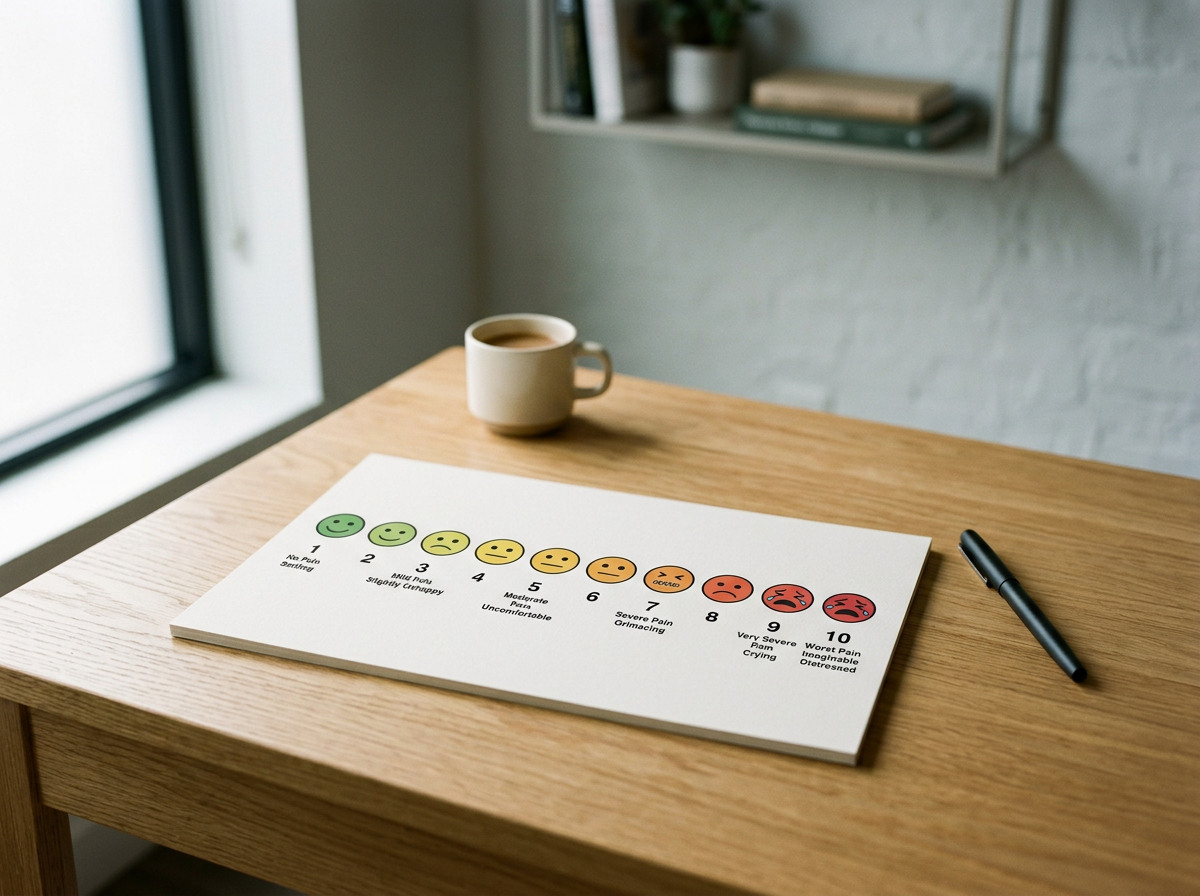
When we ask someone to rate their pain on a scale of 1-10, we assume they are using the same scale. Perhaps the man in the first example rates his pain on a lower scale. Moreover, the woman is being honest about how she feels. The doctor does not know which is correct.
If he does not take this into account, he may under-medicate one and over-medicate the other.
What About The Doctor's Bias?
Not only can the patient be influenced by their culture. But so can the doctor. Doctors also have biases that can affect how they treat patients.
One study found that Hispanics were twice as likely not to be given pain medication for a fracture. when compared with non-Hispanic whites (Todd et al., 1993). This study assessed only 139 patients. So it could be a fluke. That is why meta-analyses are helpful. A meta-analysis and systematic review showed disparities in analgesic treatment for pain in the US (Meghani et al., 2012).
Maybe it has to do with what doctors believe, as shown in a study of white medical students and residents. They were asked if there were any biological differences between blacks and whites. Some of these statements were untrue, such as blacks having thicker skin. Half of the medical students/residents believed at least one of these statements—those who believed more of these false statements rated blacks as having less pain. They were also less accurate when giving treatment recommendations. Those who did not believe any of the false statements showed no bias in their treatment recommendations (Hoffman et al., 2016).
Suppose you read our article about why minorities do not trust doctors. You will understand how this can happen when a patient does not feel like their pain is being taken seriously. They may not feel comfortable going back.
Many cultural differences can affect how someone experiences pain—both the patient and the doctor.
Conclusion
This is not to say that someone who rates their pain low is not hurting. Alternatively, that someone who rates their pain high is faking it. Everyone has different tolerances to pain, no matter what culture they are from. Many factors shape how we perceive pain. Some we know about and others we do not. Remember that you should respect a person's report of pain (Raja et al., 2020).
So when someone asks you how much you hurt. Give them your number and tell them more about your pain. How it feels and what you cannot do. Moreover, what your worst fear is. Scales can only tell us how painful something is. However, we also need to know what that pain is.
References
Gannon, W. J. (1982). Variations in the pain reactions of hospital patients. Social Behavior and Personality, 10(2), 145–150.
Hoffman, K. M., Trawalter, S., Axt, J. R., & Oliver, M. N. (2016). Racial bias in pain assessment and treatment recommendations, and false beliefs about biological differences between blacks and whites. Proceedings of the National Academy of Sciences, 113(16), 4296–4301. https://doi.org/10.1073/pnas.1516047113
Kim, H. J., Yang, G. S., Greenspan, J. D., Downton, K. D., Griffith, K. A., Renn, C. L., Johantgen, M., & Dorsey, S. G. (2017). Racial and ethnic differences in experimental pain sensitivity: Systematic review and meta-analysis. Pain, 158(2), 194–211.
Meghani, S. H., Byun, E., & Gallagher, R. M. (2012). Time to take stock: A meta-analysis and systematic review of analgesic treatment disparities for pain in the United States. Pain Medicine, 13(2), 150–174. https://doi.org/10.1111/j.1526-4637.2011.01310.x
Rahim-Williams, B., Riley, J. L., III, Williams, A. K., & Fillingim, R. B. (2012). A quantitative review of ethnic group differences in experimental pain response: Do biology, psychology, and culture matter? Pain Medicine, 13(4), 522–540. https://pmc.ncbi.nlm.nih.gov/articles/PMC3349436
Raja, S. N., Carr, D. B., Cohen, M., Finnerup, N. B., Flor, H., Gibson, S., Keefe, F. J., Mogil, J. S., Ringkamp, M., Sluka, K. A., Song, X.-J., Stevens, B., Sullivan, M. D., Tutelman, P. R., Ushida, T., & Vader, K. (2020). The revised International Association for the Study of Pain definition of pain: Concepts, challenges, and compromises. Pain, 161(9), 1976–1982. https://doi.org/10.1097/j.pain.0000000000001939
Todd, K. H., Samaroo, N., & Hoffman, J. R. (1993). Ethnicity as a risk factor for inadequate emergency department analgesia. JAMA, 269(12), 1537–1539. https://doi.org/10.1001/jama.1993.03500120075029
Zborowski, M. (1952). Cultural components in responses to pain. Journal of Social Issues, 8(4), 16–30.
